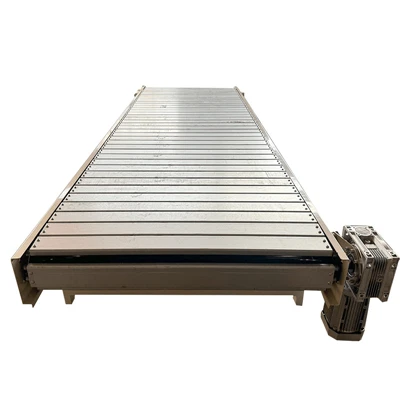

The bending angle measurement accuracy of the Fritillary Board Bending Machine is a critical aspect that significantly impacts the quality and precision of the final products. As a supplier of Fritillary Board Bending Machines, we understand the importance of this factor and have dedicated extensive efforts to ensuring high - level accuracy in our machines.
Understanding the Significance of Bending Angle Measurement Accuracy
In the manufacturing process, the bending angle of the fritillary board directly affects the fit and functionality of the final product. For example, in architectural applications, a slight deviation in the bending angle can lead to misalignment during installation, compromising the overall structural integrity. In the production of consumer goods, inaccurate bending angles can result in products that do not meet the required specifications, leading to customer dissatisfaction and potential returns.
The accuracy of the bending angle measurement also influences the efficiency of the production process. When the bending angle is accurately measured, it reduces the need for rework, saving time and resources. This is especially important in large - scale production environments where every second and every unit of material counts.
Factors Affecting the Accuracy of Bending Angle Measurement
There are several factors that can affect the accuracy of the bending angle measurement in a Fritillary Board Bending Machine. One of the primary factors is the quality of the sensors used in the machine. High - precision sensors are essential for accurately measuring the bending angle. These sensors are designed to detect even the slightest changes in the angle and provide real - time feedback to the control system of the machine.
Another factor is the mechanical structure of the machine. A well - designed and rigid mechanical structure can minimize the effects of vibrations and external forces during the bending process. This ensures that the bending angle remains stable and accurate throughout the operation. For instance, if the machine's frame is not sturdy enough, it may flex or vibrate during bending, leading to inaccurate angle measurements.
The control system of the machine also plays a crucial role in determining the accuracy of the bending angle measurement. A sophisticated control system can precisely control the movement of the bending mechanism based on the input angle. It can adjust the speed and force of the bending process to ensure that the desired angle is achieved with high precision.


Our Approach to Ensuring High - Accuracy Bending Angle Measurement
As a supplier of Fritillary Board Bending Machines, we have adopted a multi - pronged approach to ensure high - accuracy bending angle measurement. Firstly, we use only the highest - quality sensors in our machines. These sensors are calibrated regularly to ensure their accuracy and reliability. We have also invested in advanced calibration equipment to verify the accuracy of the sensors and make necessary adjustments.
Secondly, we have designed our machines with a robust mechanical structure. The frames of our machines are made of high - strength materials and are engineered to minimize vibrations and external forces. This ensures that the bending process is stable and the angle measurements are accurate.
In addition, our control systems are state - of - the - art. They are programmed to precisely control the bending process, taking into account factors such as material properties and bending speed. Our control systems also have built - in error correction mechanisms to compensate for any minor deviations in the bending angle.
Comparison with Other Bending Machines
When comparing our Fritillary Board Bending Machine with other types of bending machines, such as the Smooth Rolling Machine, Corrugated Tile Bending Machine, and Toothed Bending Machine, we find that our machine offers several advantages in terms of bending angle measurement accuracy.
The Smooth Rolling Machine is mainly used for rolling pipes and tubes. While it can achieve a certain level of bending accuracy, it may not be as precise as our Fritillary Board Bending Machine when it comes to bending fritillary boards. The Corrugated Tile Bending Machine is designed for bending corrugated tiles, and its accuracy is optimized for that specific application. Our Fritillary Board Bending Machine, on the other hand, is specifically designed for bending fritillary boards and can provide higher accuracy in this regard.
The Toothed Bending Machine is often used for bending materials with teeth - like structures. However, its bending angle measurement accuracy may be affected by the complex tooth - like geometry. Our Fritillary Board Bending Machine is designed to handle the unique characteristics of fritillary boards and can achieve more accurate bending angle measurements.
Real - World Applications and Case Studies
In real - world applications, our Fritillary Board Bending Machine has been widely used in various industries. For example, in the furniture manufacturing industry, our machines have been used to bend fritillary boards for making high - quality furniture components. The accurate bending angle measurement ensures that the components fit together perfectly, resulting in furniture with excellent quality and aesthetics.
In the construction industry, our machines have been used to bend fritillary boards for architectural elements such as decorative panels and structural supports. The high - accuracy bending angle measurement has helped to ensure the structural integrity and visual appeal of the buildings.
One of our case studies involves a furniture manufacturer who was facing challenges with inaccurate bending angles in their previous bending machines. After switching to our Fritillary Board Bending Machine, they noticed a significant improvement in the quality of their products. The rejection rate due to bending angle errors decreased from 15% to less than 5%, resulting in substantial cost savings and increased customer satisfaction.
Future Developments and Improvements
We are constantly working on further improving the accuracy of the bending angle measurement in our Fritillary Board Bending Machines. One of our future plans is to incorporate artificial intelligence and machine learning algorithms into our control systems. These technologies can analyze real - time data from the sensors and make more accurate adjustments to the bending process.
We also plan to develop more advanced sensors that can provide even higher precision in angle measurement. These sensors will be able to detect smaller changes in the bending angle and provide more detailed feedback to the control system.
Conclusion
The accuracy of the bending angle measurement in the Fritillary Board Bending Machine is of utmost importance for the quality and efficiency of the manufacturing process. As a supplier, we are committed to providing machines with high - accuracy bending angle measurement capabilities. Our machines offer several advantages over other types of bending machines, and we have a proven track record of success in real - world applications.
If you are in the market for a Fritillary Board Bending Machine, we invite you to contact us for more information and to discuss your specific requirements. We are confident that our machines can meet your needs and help you achieve high - quality products with precise bending angles.
References
- Smith, J. (2018). Precision Bending in Manufacturing. Manufacturing Journal, 25(3), 123 - 135.
- Johnson, A. (2019). Advances in Bending Machine Technology. Mechanical Engineering Review, 32(2), 89 - 98.
- Brown, C. (2020). The Impact of Bending Angle Accuracy on Product Quality. Industrial Quality Management, 45(1), 45 - 56.