Product Overview
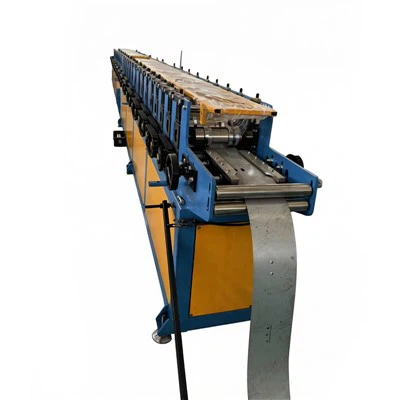
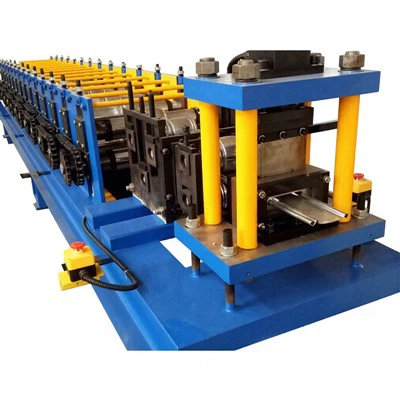
Metal sheet roll cold rolling forming equipment transforms continuous metal coils into precise structural profiles through a sequential series of driven roller stations at ambient temperatures.
Target Processing Materials: Galvanized steel (GI), galvalume, cold-rolled steel (CRC), hot-rolled pickled and oiled steel (HRPO), aluminum alloys, and stainless steel.
Target Industries: Metal construction, steel structure fabrication, automotive components, HVAC ductwork, solar mounting structures, logistics racking, and electrical enclosures.
Target Buyers: Roll-forming service centers, contract manufacturers, structural component fabricators, and industrial plant expansion project managers.
-
![Automatic Coil Unwinder System]() Automatic Coil Unwinder SystemThe Automatic Coil Unwinder System is a coil pay-off machine for automated sheet-metal processing. It supplies strip to continuous roll-forming, shelving and other coil-fed production lines, forming
-
![Wedge Type Hydraulic Uncoiler With Coil Car]() Wedge Type Hydraulic Uncoiler With Coil CarThe Wedge Type Hydraulic Uncoiler With Coil Car is an integrated coil-loading and pay-off assembly for sheet-metal production. It is used at the entry of purlin, HVAC duct and metal-roofing lines
-
![Industrial Heavy-Capacity Decoiler]() Industrial Heavy-Capacity DecoilerThe Industrial Heavy-Capacity Decoiler is a large-coil pay-off machine for heavy steel-processing installations. It serves the entry section of production systems for bridge components, highway
-
![Hydraulic Decoiler With Loading Car]() Hydraulic Decoiler With Loading CarThe Hydraulic Decoiler With Loading Car combines a coil pay-off unit with a mobile loading platform. It is used in coil-processing centres, roofing-sheet production and automotive stamping
-
![Wedge Expansion Hydraulic Decoiler]() Wedge Expansion Hydraulic DecoilerThe Wedge Expansion Hydraulic Decoiler is a coil pay-off unit for precision sheet-metal processing. It is used ahead of automotive-component lines, appliance-panel forming equipment and
-
![Strut Design Hydraulic Uncoiler]() Strut Design Hydraulic UncoilerThe Strut Design Hydraulic Uncoiler is a heavy-coil pay-off machine for steel-processing lines. It is used in floor-deck production, thick-wall pipe forming and industrial steel-processing centres
-
![Double-Head Manual Uncoiler]() Double-Head Manual UncoilerThe Double-Head Manual Uncoiler is a two-position coil pay-off stand for sheet-metal production. It is used with punching, shelving and door-frame roll-forming lines, particularly in manufacturing
-
![Non-Powered Unwinding Stand]() Non-Powered Unwinding StandThe Non-Powered Unwinding Stand is a passive coil-holding and pay-off unit for sheet-metal workshops. It is used with manual folding machines, corrugated-sheet roll-forming equipment and small
-
![Motor-Driven Material Feeder]() Motor-Driven Material FeederThe Motor-Driven Material Feeder is a powered strip-delivery machine for sheet-metal production lines. It is used in solar-bracket, cable-tray and light-steel-frame manufacturing, supplying material
-
![Hydraulic Uncoiling Machine]() Hydraulic Uncoiling MachineThe Hydraulic Uncoiling Machine is a coil pay-off unit for steel-strip processing. It is used at the entry of C/Z purlin, roofing-tile, highway-guardrail and automotive stamping lines, supplying
-
![Floor Decking Machine]() Floor Decking MachineYuanding’s Floor Decking Machine is a coil-fed roll forming line for profiled steel decking used beneath concrete floor slabs. It produces deck panels for multi-storey commercial buildings,
-
![Metal Stud Machine]() Metal Stud MachineYuanding’s Metal Stud Machine converts thin steel strip into C-shaped studs for internal wall framing. The finished sections are used with matching tracks in office partitions, apartment interiors,


Product Types & Configurations
Industrial roll forming lines are engineered according to profile complexity, production volume, and material specifications.
Single-Profile Dedicated Lines: Engineered for continuous, high-volume production of a single profile geometry with fixed tooling stands and high operational uptime.
Cassette-Type Quick-Change Lines: Utilizes interchangeable pre-assembled roller cassettes to reduce tool changeover downtime for facilities producing multiple profile variations.
Flexible/Auto-Adjustable Lines: Automated width and height adjustment driven by servo motors for variable-dimension purlins (C, Z, U profiles) and structural studs.
Standard Line Layout:
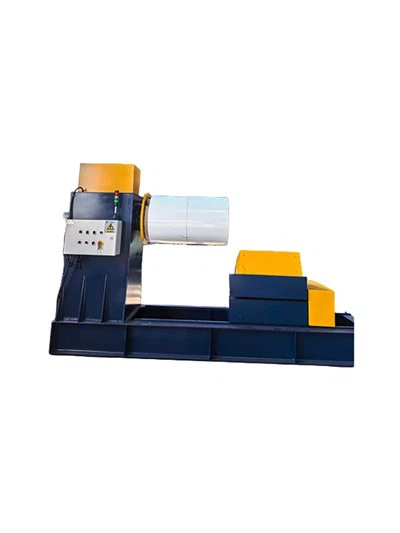
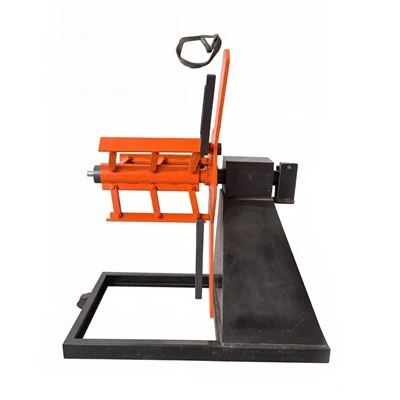
Decoiler (Manual/Hydraulic) → Leveling/Feeding Unit → Hydraulic Pre-Punching/Pre-Cutting (optional) → Main Roll Forming Mill → Post-Cutting Unit (Hydraulic Shear) → Run-out Table / Auto Stacker.
Key Specifications
Values below represent typical mid-to-heavy industrial configurations. Exact parameters are customized per profile drawing.
|
Specification Parameter |
Technical Range |
|
Input Coil Thickness |
0.3 mm - 6.0 mm (material dependent) |
|
Input Coil Width |
100 mm - 1500 mm |
|
Maximum Yield Strength |
Up to 450 MPa (Q345, S350GD) |
|
Forming Speed |
10 - 30 m/min (standard); up to 60 m/min (high-speed lines) |
|
Roller Material |
Forged GCr15 alloy steel or Cr12MoV, vacuum hardened to HRC 58-62 |
|
Main Shaft Material |
40Cr forged steel, quenched and tempered, ground diameter |
|
Drive System |
Gearbox transmission or heavy-duty roller chain (configured per load) |
|
Length Tolerance |
±1.0 mm (flying shear encoder feedback control) |
|
Control System |
PLC-based (Siemens / Schneider / Delta) with touch screen HMI |
Applications
Construction & Roofing:
Trapezoidal corrugated sheets, standing seam roof panels, drywall studs, and light gauge steel framing (LGSF).
Structural Infrastructure:
C, Z, U, and Sigma structural purlins for industrial warehouses and agricultural buildings.
Logistics & Storage:
Uprights, beams, and shelf panels for selective and drive-in pallet racking systems.
Electrical & Mechanical:
Cable trays, strut channels, HVAC ventilation ducts, and elevator guide rails.

Tooling & Rollers: Custom roll pass design simulated via finite element analysis (FEA) software to eliminate metal thinning, edge wrinkling, and springback distortion.
Punching & Embossing: Inline hydraulic punching units positioned before or after the roll forming mill to eliminate secondary off-line operations.
Cutting Mechanisms: Stop-to-cut hydraulic shears (die matched to profile shape) or non-stop flying cutoff saws for high-speed production lines.
Automation Package: Fully automated coil loading cars, hydraulic uncoiler tension brakes, automatic width/height servo positioning, and robotic/mechanical stacking systems.
Manufacturing & Quality Control
Precision roll forming relies on rigorous mechanical machining tolerances and metallurgical control during component fabrication.
Mill Stand Machining:
Main machine plates and bases are welded from thick structural steel, annealed to relieve internal welding stresses, and machined in a single setup on large CNC floor boring machines to ensure parallel shaft alignment.
Roller Processing:
Rollers are CNC turned, heat treated to precise hardness specifications, precision ground on the outer diameter and bore, and inspected for runout tolerance (≤0.015 mm).
Pre-Shipment Factory Testing:
Every line undergoes dry-run testing and trial production using customer-supplied raw material coils. Dimensional accuracy, profile straightness, drive torque, and hydraulic system pressure are verified before container loading.
Technical Evaluation: Provide profile CAD drawings, material grade, coil thickness, yield strength, and target annual output. Engineering reviews feasibility and provides a layout proposal and roller pass design simulation.
Documentation Package: Complete technical manuals provided upon delivery, including electrical schematics, hydraulic diagrams, PLC programs, foundation installation drawings, and wear-part spare parts lists.
Commissioning & Training: On-site mechanical installation, alignment, electrical wiring, and operator training conducted by experienced commissioning engineers. Remote diagnostic support is standard on all PLC-controlled lines.

Frequently Asked Questions

Request a Quote
To receive an accurate technical proposal and commercial quotation, submit the following parameters:
Profile Drawing: DXF or PDF cross-section drawing with critical dimensions and tolerances.
Material Specification: Material type (e.g., GI, aluminum, stainless steel), coil thickness range, and yield strength.
Coil Specifications: Max coil outer diameter, inner diameter, and coil weight limit.
Operational Requirements: Target production speed, cutting method (stop-cut vs. flying cut), and required automation level (manual stacking vs. auto-stacker).
We're well-known as one of the leading metal sheet roll cold rolling forming equipment manufacturers and suppliers in China, also support customized service. Please feel free to buy advanced metal sheet roll cold rolling forming equipment made in China here from our factory. For pricelist, contact us now.