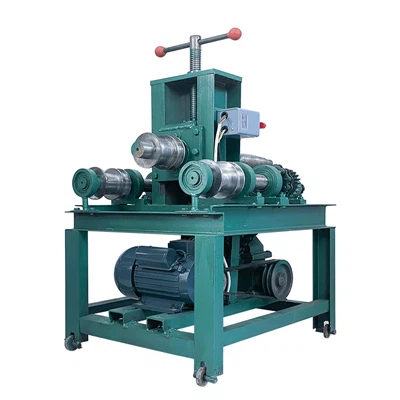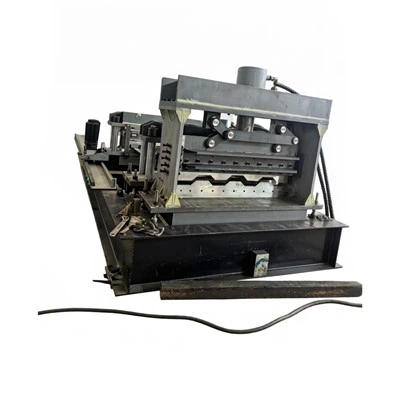

When it comes to the agricultural and livestock industries, the efficient storage and management of feed are crucial. A key piece of equipment in this process is the Feed Bin Forming Machine. As a provider of these advanced machines, I am often asked about their production capacity. In this blog, I will delve into the factors that determine the production capacity of a Feed Bin Forming Machine, its implications, and how it can influence your business operations.
Understanding the Feed Bin Forming Machine
Before discussing production capacity, it's important to understand the Feed Bin Forming Machine. This machine is designed to transform flat metal sheets into various components used for building feed bins. These components can include wall panels, roof parts, and other structural elements. The process typically involves several steps, such as bending, cutting, and punching, to create custom - shaped pieces that fit together to form a complete feed bin.


Factors Affecting Production Capacity
1. Machine Design and Model
The design and model of the Feed Bin Forming Machine play a significant role in determining its production capacity. Different machines are built with varying levels of sophistication and automation. For instance, some machines are semi - automated, requiring some manual intervention at certain stages of the production process. These machines might have a lower production capacity, typically ranging from a few pieces per hour to around 10 - 15 units per hour depending on the complexity of the components being produced.
On the other hand, fully automated machines are equipped with advanced control systems and robotics. They can operate continuously with minimal human intervention, resulting in a much higher production capacity. A high - end fully automated Feed Bin Forming Machine can produce 20 - 30 or even more components per hour. This is because the automated processes are faster, more precise, and can work around the clock with proper maintenance.
2. Material Properties
The type and thickness of the material used also impact production capacity. Thicker metal sheets generally require more power and time to process. For example, if you are using a 1 - millimeter thick steel sheet, the forming process might be relatively quick compared to a 3 - millimeter thick sheet. The machine has to apply more force to bend and cut the thicker material, which can slow down the overall production speed.
Moreover, different materials have different mechanical properties. Some materials are more ductile, making them easier to form, while others are brittle and may require more careful handling during the forming process. Stainless steel, for example, is corrosion - resistant but can be more difficult to work with compared to mild steel, potentially reducing the production capacity.
3. Component Complexity
The complexity of the feed bin components being produced is another critical factor. Simple, flat - walled panels can be produced much faster than panels with complex shapes, such as those with multiple bends, corrugations, or intricate cut - outs. Producing a component with many detailed features requires the machine to perform a series of precise operations, which takes more time.
For instance, a basic rectangular wall panel might take only a few minutes to produce on a Feed Bin Forming Machine. However, a panel with a special corrugated pattern for added strength or a panel with custom - sized holes for ventilation or access could take 10 - 15 minutes or more depending on the machine's capabilities.
4. Operator Skill and Experience
The skill and experience of the machine operator also have an impact on production capacity. A well - trained operator can set up the machine more efficiently, optimize the production process, and troubleshoot problems quickly. They know how to adjust the machine settings to achieve the best results, such as the speed of the forming process, the pressure applied during bending, and the accuracy of cutting.
Inexperienced operators, on the other hand, may take longer to set up the machine, make more mistakes during production, and have difficulty dealing with unexpected issues. This can lead to downtime and a decrease in overall production capacity.
Measuring Production Capacity
Production capacity of a Feed Bin Forming Machine is usually measured in terms of the number of components produced per hour, day, or week. For example, if a machine can produce 15 simple wall panels per hour and operates 8 hours a day, its daily production capacity would be 120 panels. However, it's important to note that this is an ideal scenario and actual production may be affected by factors such as machine maintenance, material availability, and operator breaks.
In some cases, production capacity can also be measured in terms of the volume or tonnage of feed bins that can be produced. For example, if the machine produces components that can be assembled into a total volume of 100 cubic meters of feed bins per day, this gives a clear indication of its large - scale production capabilities.
Implications of Production Capacity for Your Business
1. Meeting Demand
Understanding the production capacity of a Feed Bin Forming Machine is crucial for businesses to meet market demand. If your business is experiencing growth and you need to increase the number of feed bins you produce, you need a machine with a sufficient production capacity. A machine with a low production capacity may lead to production bottlenecks, delayed orders, and dissatisfied customers.
2. Cost - Efficiency
Production capacity is also related to cost - efficiency. A machine with a higher production capacity can spread its fixed costs (such as the cost of the machine itself, installation, and maintenance) over a larger number of units. This means that the cost per unit of production is lower, making it more cost - effective for large - scale production.
3. Scalability
As your business expands, the production capacity of your Feed Bin Forming Machine needs to be scalable. You may start with a smaller - capacity machine, but as demand grows, you may need to upgrade to a more advanced machine with a higher production capacity. This allows your business to adapt to changing market conditions and continue to grow.
Complementary Equipment
In addition to the Feed Bin Forming Machine, there are other pieces of equipment that can enhance the overall production process. For example, the Connecting Plate Production Line can produce the connecting plates that are essential for assembling the feed bin components. Having a high - performance connecting plate production line can speed up the assembly process and increase the overall output of feed bins.
Another complementary equipment is the Steel Silo Corrugated Panel Line. This line can produce corrugated panels which are stronger and more durable, suitable for large - scale feed storage. By integrating these complementary equipment into your production process, you can achieve a more streamlined and efficient production system.
Conclusion
In conclusion, the production capacity of a Feed Bin Forming Machine is influenced by multiple factors, including machine design, material properties, component complexity, and operator skill. Understanding these factors is essential for businesses in the feed bin manufacturing industry. By choosing a machine with the appropriate production capacity, you can meet market demand, improve cost - efficiency, and ensure the scalability of your business.
If you are in the market for a Feed Bin Forming Machine or want to learn more about how to optimize your feed bin production process, feel free to contact us. We are here to provide you with the best solutions tailored to your specific needs.
References:
- Industry reports on agricultural equipment manufacturing
- Research papers on metal forming processes