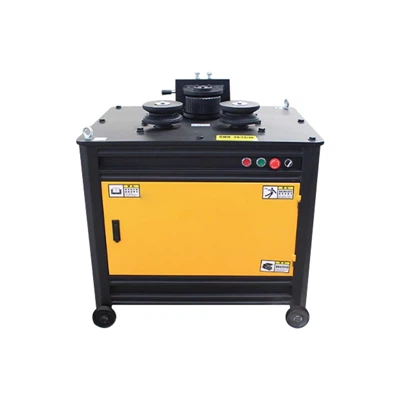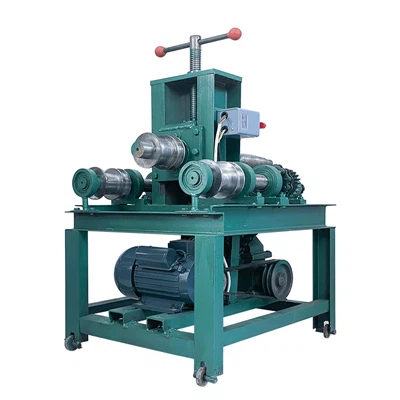

In the manufacturing industry, the accuracy of machinery is of utmost importance, especially when it comes to bending machines. As a supplier of Corrugated Sheet Bending Machines, I have witnessed firsthand the critical role that accuracy plays in producing high - quality corrugated sheets. In this blog, we will delve into the factors that affect the accuracy of a Corrugated Sheet Bending Machine and how we ensure optimal precision in our products.
Factors Affecting the Accuracy of a Corrugated Sheet Bending Machine
Machine Design and Construction
The design and construction of a Corrugated Sheet Bending Machine are fundamental to its accuracy. A well - designed machine will have a robust frame that can withstand the forces exerted during the bending process. The alignment of the bending tools is also crucial. Misaligned tools can lead to uneven bends and inaccurate angles. For example, if the upper and lower bending dies are not properly aligned, the corrugated sheet may not be bent to the desired shape, resulting in product defects.
Our Corrugated Sheet Bending Machines are engineered with precision in mind. We use high - quality materials for the frame and ensure that all components are machined to tight tolerances. The bending tools are carefully calibrated to ensure accurate alignment, which is essential for achieving consistent and precise bends.
Material Properties
The properties of the corrugated sheet material can significantly impact the accuracy of the bending process. Different materials have different mechanical properties, such as hardness, ductility, and elasticity. For instance, a harder material may require more force to bend, and if the machine is not adjusted properly, it can lead to over - bending or under - bending.


We understand the importance of material properties and offer machines that can be adjusted to accommodate a wide range of materials. Our machines are equipped with advanced control systems that allow operators to adjust the bending force, speed, and other parameters based on the specific material being used. This ensures that the corrugated sheets are bent accurately, regardless of the material's properties.
Operator Skill
The skill and experience of the operator also play a vital role in the accuracy of the bending process. An experienced operator will be able to set up the machine correctly, adjust the parameters as needed, and identify and correct any issues that may arise during the bending process.
We provide comprehensive training to our customers' operators to ensure that they are proficient in using our Corrugated Sheet Bending Machines. Our training programs cover everything from machine setup and operation to troubleshooting and maintenance. By empowering operators with the necessary skills and knowledge, we help them achieve high - accuracy bending results.
Measuring the Accuracy of a Corrugated Sheet Bending Machine
Angle Accuracy
One of the key indicators of a bending machine's accuracy is the angle of the bend. The angle should be measured precisely to ensure that it meets the required specifications. This can be done using a protractor or a digital angle gauge. In our manufacturing process, we use high - precision measuring tools to verify the angle accuracy of the bends.
Dimensional Accuracy
In addition to angle accuracy, dimensional accuracy is also crucial. The length, width, and thickness of the corrugated sheet after bending should be within the specified tolerances. We use advanced measuring equipment, such as calipers and micrometers, to measure the dimensions of the bent sheets. Any deviations from the required dimensions are carefully analyzed and corrected to ensure product quality.
Ensuring High - Accuracy Bending with Our Corrugated Sheet Bending Machines
Advanced Control Systems
Our Corrugated Sheet Bending Machines are equipped with advanced control systems that allow for precise control of the bending process. These systems use digital technology to accurately set and adjust the bending parameters, such as the bending angle, force, and speed. The control systems also have built - in error correction mechanisms that can detect and correct any deviations during the bending process.
Quality Assurance Processes
We have a rigorous quality assurance process in place to ensure the accuracy of our Corrugated Sheet Bending Machines. Every machine undergoes a series of tests and inspections before it is shipped to the customer. These tests include checking the alignment of the bending tools, verifying the accuracy of the control systems, and testing the machine's performance with different materials.
Comparison with Other Bending Machines
Toothed Bending Machine
A Toothed Bending Machine is another type of bending machine commonly used in the industry. While toothed bending machines are suitable for certain applications, they may not offer the same level of accuracy as a Corrugated Sheet Bending Machine. Toothed bending machines rely on teeth to grip the material during the bending process, which can sometimes cause marks or damage to the surface of the sheet. In contrast, our Corrugated Sheet Bending Machines use smooth bending tools that minimize surface damage and ensure accurate bends.
Fritillary Board Bending Machine
A Fritillary Board Bending Machine is designed specifically for bending fritillary boards. These machines may have different requirements and capabilities compared to Corrugated Sheet Bending Machines. Fritillary board bending machines are optimized for the unique properties of fritillary boards, such as their thickness and flexibility. Our Corrugated Sheet Bending Machines, on the other hand, are designed to handle a variety of corrugated sheet materials and can be adjusted to achieve accurate bends for different applications.
The Importance of Accuracy in Corrugated Sheet Bending
Accurate bending of corrugated sheets is essential for several reasons. Firstly, it ensures the proper fit and functionality of the final product. For example, in the construction industry, corrugated sheets are often used for roofing and siding. If the sheets are not bent accurately, they may not fit together properly, leading to leaks and other issues.
Secondly, accurate bending improves the aesthetic appearance of the product. Well - bent corrugated sheets have a smooth and uniform look, which enhances the overall visual appeal of the structure.
Finally, accurate bending reduces waste and production costs. When the bending process is accurate, there are fewer defective products, which means less material is wasted. This can result in significant cost savings for the manufacturer.
Conclusion
In conclusion, the accuracy of a Corrugated Sheet Bending Machine is influenced by various factors, including machine design, material properties, and operator skill. As a supplier of Corrugated Sheet Bending Machines, we are committed to providing high - quality machines that offer precise and consistent bending results. Our advanced control systems, rigorous quality assurance processes, and comprehensive training programs ensure that our customers can achieve the highest level of accuracy in their corrugated sheet bending operations.
If you are in the market for a Corrugated Sheet Bending Machine and are looking for a reliable supplier that can offer accurate and high - quality machines, we encourage you to contact us for a detailed discussion about your requirements. We are here to help you find the best solution for your corrugated sheet bending needs.
References
- Smith, J. (2018). "Advanced Manufacturing Techniques for Bending Machines". Manufacturing Journal, 25(3), 123 - 135.
- Johnson, A. (2019). "The Impact of Material Properties on Bending Accuracy". Materials Science Review, 18(2), 78 - 89.
- Brown, C. (2020). "Operator Training and Its Role in Bending Machine Accuracy". Industrial Training Magazine, 32(4), 45 - 56.