
In the dynamic landscape of industrial manufacturing, the efficiency and effectiveness of equipment play a pivotal role in determining overall productivity. Among the essential machinery in various industries, stackers stand out as crucial tools for handling and organizing materials. As a leading stacker supplier, I am often asked about the productivity of stackers. In this blog post, we will delve into the concept of stacker productivity, exploring its key components, factors that influence it, and how our stacker solutions can enhance your operations.
Understanding Stacker Productivity
Stacker productivity refers to the ability of a stacker to perform its tasks efficiently and effectively within a given time frame. It is a multifaceted metric that encompasses several aspects, including the speed of operation, accuracy of stacking, capacity utilization, and reliability. A highly productive stacker can significantly streamline material handling processes, reduce labor costs, and improve overall operational efficiency.
One of the primary indicators of stacker productivity is the stacking speed. This refers to the rate at which a stacker can pick up, transport, and deposit materials. Faster stacking speeds can lead to higher throughput, allowing companies to process more materials in less time. However, speed alone is not enough; accuracy is also crucial. A stacker must be able to position materials precisely in the desired location, ensuring that the stacks are stable and organized.
Capacity utilization is another important factor in stacker productivity. A well-designed stacker should be able to make the most of its available storage space, maximizing the number of materials that can be stacked within a given area. This not only reduces the need for additional storage facilities but also improves the overall efficiency of the warehouse or production facility.
Reliability is also a key consideration when evaluating stacker productivity. A stacker that breaks down frequently can cause significant disruptions to operations, leading to delays and increased costs. Therefore, it is essential to choose a stacker that is built to last and backed by a reliable maintenance and support system.
Factors Affecting Stacker Productivity
Several factors can influence the productivity of a stacker. These include the type of stacker, the nature of the materials being stacked, the layout of the facility, and the skill level of the operators.
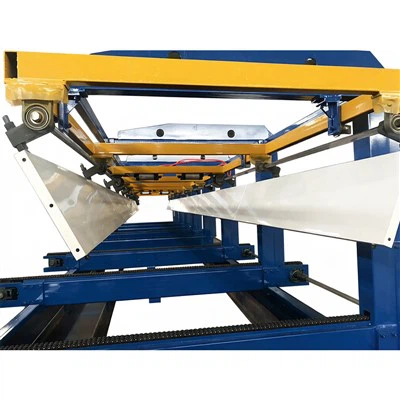
The type of stacker is perhaps the most significant factor affecting productivity. There are several different types of stackers available on the market, each with its own unique features and capabilities. For example, Electric Single Layer Stacking Machine is designed for handling single-layer materials, while a pneumatic double layer stacker can handle two layers of materials simultaneously. The choice of stacker will depend on the specific requirements of your application, including the size, weight, and shape of the materials, as well as the stacking pattern and storage capacity.
The nature of the materials being stacked can also have a significant impact on stacker productivity. Materials that are heavy, bulky, or irregularly shaped may require specialized handling equipment or additional processing steps, which can slow down the stacking process. Additionally, materials that are prone to damage or deformation may require more careful handling, further reducing productivity.
The layout of the facility is another important factor to consider. A well-designed facility can optimize the flow of materials, reducing the distance that the stacker needs to travel and minimizing the time spent on handling tasks. This can include features such as strategically placed storage areas, dedicated loading and unloading zones, and clear traffic patterns.
Finally, the skill level of the operators can also affect stacker productivity. A trained and experienced operator will be able to operate the stacker more efficiently, making fewer mistakes and minimizing downtime. Therefore, it is essential to provide comprehensive training to your operators and ensure that they are familiar with the features and capabilities of the stacker.
Our Stacker Solutions for Enhanced Productivity
At our company, we understand the importance of stacker productivity in today's competitive business environment. That's why we offer a wide range of high-quality stacker solutions designed to meet the diverse needs of our customers.


Our Electric Single Layer Stacking Machine is a versatile and efficient solution for handling single-layer materials. It features a high-speed electric drive system, which allows for fast and accurate stacking operations. The machine is also equipped with advanced control technology, which ensures precise positioning of the materials and maximum capacity utilization.
For customers who need to handle two layers of materials simultaneously, we offer the Pneumatic Double Layer Stacking Machine. This machine is powered by a pneumatic system, which provides smooth and reliable operation. It features a unique double-layer stacking mechanism, which allows for efficient stacking of two layers of materials in a single pass.
In addition to our standard stacker models, we also offer custom-designed solutions to meet the specific requirements of our customers. Our team of experienced engineers can work with you to design a stacker that is tailored to your application, taking into account factors such as the size, weight, and shape of the materials, as well as the stacking pattern and storage capacity.
Conclusion
In conclusion, stacker productivity is a critical factor in determining the success of your operations. By understanding the key components of stacker productivity and the factors that influence it, you can make informed decisions when selecting a stacker for your business. At our company, we are committed to providing high-quality stacker solutions that are designed to enhance productivity, efficiency, and reliability. If you are interested in learning more about our stacker products or discussing your specific requirements, please do not hesitate to contact us. We look forward to the opportunity to work with you to improve your operations and achieve your business goals.
References
- "Industrial Stacker Handbook," published by a leading industry association.
- Research papers on material handling and logistics from reputable academic journals.