
Hey there! As a stacker supplier, I've been getting a lot of questions lately about how to improve the stacking efficiency of a stacker. So, I thought I'd write this blog post to share some tips and methods that I've found really useful.
Understanding Stacking Efficiency
First off, let's talk about what stacking efficiency actually means. Stacking efficiency is all about how well a stacker can stack items in a given space and time. A more efficient stacker can handle more items, stack them more neatly, and do it faster. This is super important for businesses because it can save a ton of time and money.
Factors Affecting Stacking Efficiency
Before we dive into the improvement methods, it's important to understand the factors that can affect stacking efficiency.


Item Characteristics: The size, shape, and weight of the items being stacked play a big role. For example, irregularly shaped items are harder to stack neatly than regular ones.
Stacker Design: The design of the stacker itself matters a lot. A well - designed stacker will have features that make it easier to handle different types of items.
Operator Skills: The person operating the stacker also has an impact. A skilled operator can make the stacker work more efficiently.
Improvement Methods
1. Optimize Stacker Design
One of the most effective ways to improve stacking efficiency is to optimize the stacker design.
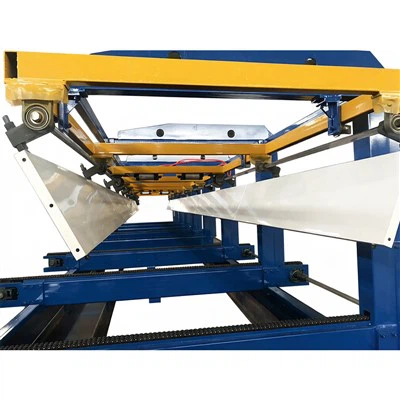
Adjustable Stacking Height: A stacker with an adjustable stacking height can be used for different types of items. For example, if you're stacking tall items one day and short ones the next, an adjustable stacker can adapt to the situation. You can check out our Z Section Steel Stacking Machine, which has a flexible design to handle various stacking heights.
Automated Features: Automated stackers can significantly improve efficiency. They can stack items more precisely and at a faster pace. Our Electric Double Layer Stacking Machine comes with automated functions that can handle double - layer stacking with ease.
2. Improve Item Handling
Another key aspect is to improve how the stacker handles the items.
Proper Gripping Mechanisms: Using the right gripping mechanisms is crucial. For items that are slippery or have an odd shape, a specialized gripper can ensure a secure hold. This reduces the chances of items falling during the stacking process.
Sorting and Grouping: Sorting the items before stacking can make the process much more efficient. Group similar items together so that the stacker can handle them in a more organized way.
3. Train Operators
Well - trained operators are essential for high - efficiency stacking.
Regular Training Sessions: Conduct regular training sessions to keep operators updated on the latest techniques and safety procedures. This can improve their skills and confidence in operating the stacker.
Simulation Training: Simulation training can be a great way to let operators practice different scenarios without the risk of damaging the stacker or the items.
4. Use Data Analytics
Data analytics can provide valuable insights into the stacking process.
Monitor Stacking Performance: By monitoring the stacking performance, you can identify areas that need improvement. For example, if you notice that the stacker is spending too much time on a particular type of item, you can look into ways to optimize the process.
Predictive Maintenance: Data analytics can also be used for predictive maintenance. By analyzing the data from the stacker, you can predict when maintenance is needed, which can prevent breakdowns and keep the stacker running smoothly.
Case Studies
Let me share a couple of case studies to show how these improvement methods have worked in real - world situations.
Case Study 1: A Manufacturing Company
A manufacturing company was having trouble with the stacking efficiency of their products. They were using an old stacker that was not very flexible. After upgrading to our Electric Single Layer Stacking Machine and providing training to their operators, they saw a significant improvement in stacking efficiency. The new stacker was able to handle different types of products more quickly, and the operators were more confident in their abilities.
Case Study 2: A Warehouse
A warehouse was struggling with the stacking of irregularly shaped items. They implemented a sorting and grouping system and used a stacker with a specialized gripping mechanism. This led to a more organized stacking process and a reduction in the number of damaged items.
Conclusion
Improving the stacking efficiency of a stacker is a multi - faceted process. By optimizing the stacker design, improving item handling, training operators, and using data analytics, you can achieve significant improvements. If you're looking to upgrade your stacker or need more information on how to improve your stacking efficiency, don't hesitate to reach out. We're here to help you find the best solutions for your business.
References
- Industry reports on stacker efficiency
- Case studies from various businesses using stackers